



mill stainless steel
The Evolution and Significance of Stainless Steel Mills Stainless steel mills are vital components of the modern industrial landscape, providing a durable and corrosion-resistant material that is essential for various applications. As industries grow and evolve, the demand for stainless steel has surged, compelling mills to innovate and adapt to these changing needs. This article delves into the history, processes, and significance of stainless steel mills in today's world. History of Stainless Steel The journey of stainless steel began in the early 20th century. In 1913, Harry Brearley, a British metallurgist, discovered that adding chromium to steel improved its corrosion resistance. This breakthrough led to the development of what we now know as stainless steel. Over the ensuing decades, the material gained traction in various sectors, including construction, automotive, medical, and food processing, due to its strength and hygiene properties. As the demand for stainless steel increased, manufacturers realized that establishing dedicated mills for its production would be essential. These mills focus on producing stainless steel alloys, which are primarily composed of iron, chromium, and nickel. The Stainless Steel Production Process The production of stainless steel in mills involves several critical steps, including melting, casting, forming, and finishing . 1. Melting The process begins in an electric arc furnace (EAF), where raw materials, including scrap stainless steel, are melted. The EAF allows for precise temperature control and is integral to producing high-quality steel. 2. Casting Once melted, the liquid steel is cast into specific shapes, such as slabs, blooms, or billets. Continuous casting is a common technique used, wherein the molten steel is poured into a mold that moves, allowing for sheets or long rods to be produced efficiently. 3. Forming After casting, the steel undergoes forming processes such as hot rolling and cold rolling. Hot rolling involves heating the slabs and then passing them through rollers to create thin sheets or shapes. Cold rolling, on the other hand, is performed at room temperature, enhancing the material's strength and surface finish. stainless steel mills 4. Finishing The final phase includes various treatments to improve the mechanical properties and surface quality of stainless steel. This may involve annealing, pickling, passivation, and polishing. Each of these processes is tailored to the desired specifications, ensuring that the final product meets industry standards. Importance of Stainless Steel Mills Stainless steel mills play an integral role in various industries. One of the most significant aspects is their contribution to manufacturing hygiene and food safety. The non-corrosive nature of stainless steel makes it ideal for food processing and pharmaceutical applications, where cleanliness is paramount. Equipment made from stainless steel is easier to clean and less likely to harbor bacteria compared to other materials. Moreover, stainless steel’s durability and resistance to extreme conditions make it indispensable in the construction industry. It is used in building frameworks, bridges, and various structural components. As urbanization continues to rise, the demand for reliable construction materials has made stainless steel mills increasingly important. Additionally, the automotive industry has embraced stainless steel for its aesthetic appeal and performance characteristics. Car manufacturers utilize this material to enhance the longevity and appearance of vehicles, contributing to sustainability through increased vehicle lifespans. Environmental and Economic Considerations Stainless steel mills are also adapting to environmental concerns and aiming for sustainability. Many mills are employing recycling processes to minimize waste. Since stainless steel is highly recyclable, this aligns with global initiatives to reduce the carbon footprint of industries. Economically, stainless steel mills contribute significantly to local and global economies by providing jobs and fostering innovation. As industries evolve, the demand for advanced stainless steel products continues to expand, driving further growth and development in this sector. Conclusion Stainless steel mills are not just factories; they are the backbone of modern industry, contributing to hygiene, safety, and sustainability across various sectors. As technology advances and the world continues to change, these mills will remain pivotal in meeting the needs of industries and consumers alike. The future looks bright for stainless steel, and with it, the mills that produce this essential material will undoubtedly thrive.

We have successfully executed over 500
projects around the world,
many first-of-their-kind
research projects and products in China, including
We have successfully executed over 500
projects around the world,
many first-of-their-kind
research projects and products in China, including
-
2004
The 1st hydraulic AGC system for hot rolling of ribbon steel
-
2006
The 1st AFC system used for 1450mm skin pass mill
-
2009
The 1st 5-stand tandem line with 2-stand POR & Uncoiler for 650mm ribbon steel
-
2012
The 1st reversing mill for 1380mm strip
-
2016
The 1st soft-rolling system used in skin pass mill
-
2019
The 1st fully automated medium-width tandem cold rolling mill
-
2021
The 1st 5000KN Twin-stand double skin pass mill
-
2022
The 1st coupled pickling line & tandem cold mill with two modes - big roller & small roller
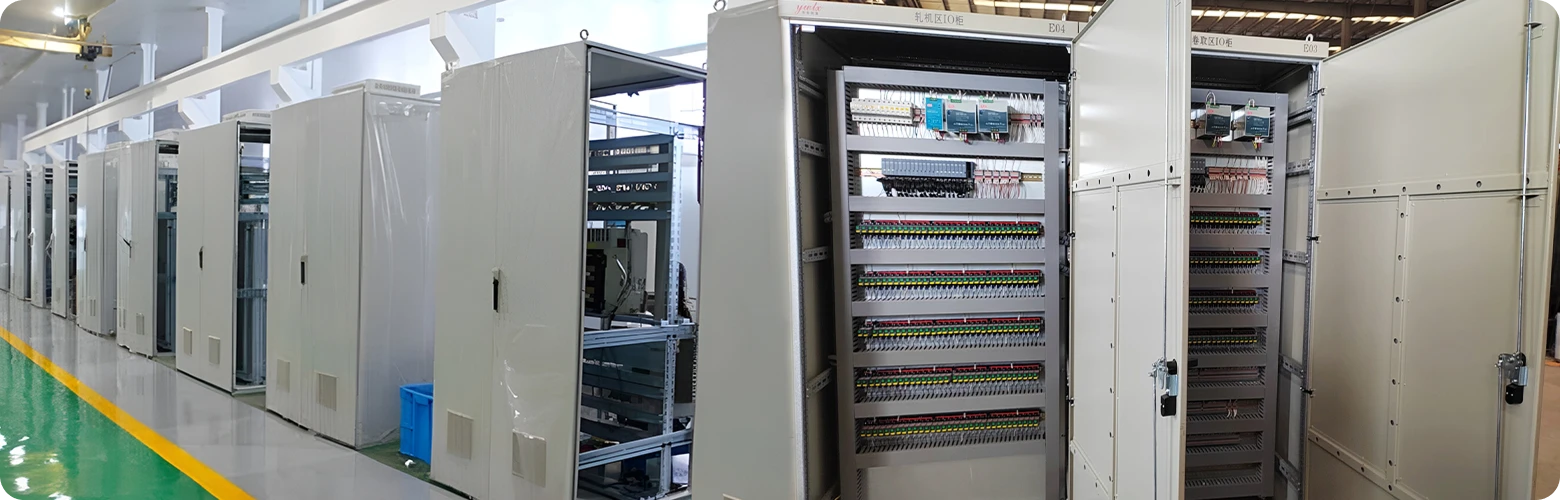
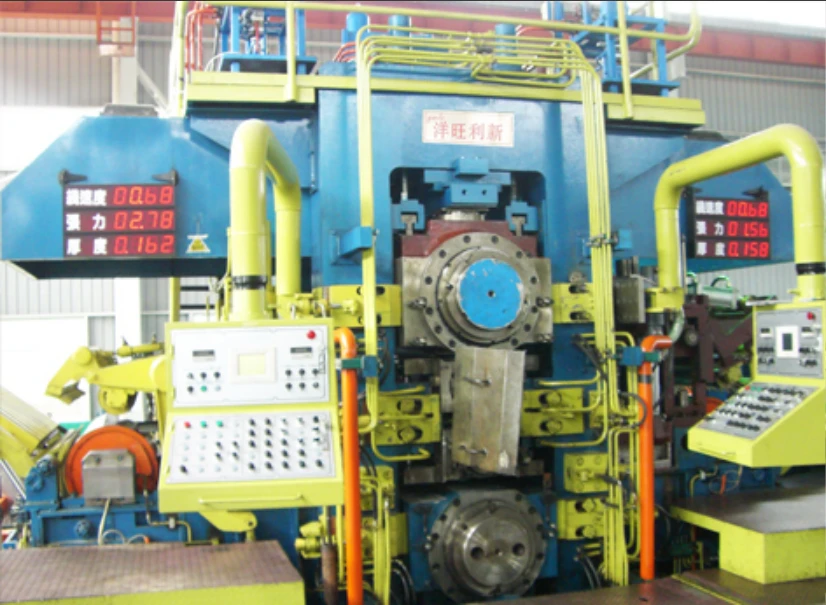
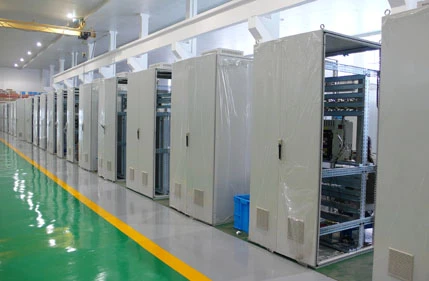
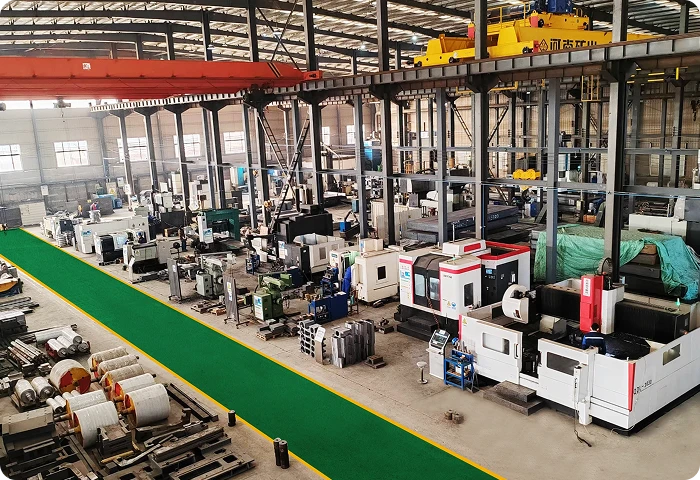
Yang Wang Li Xin operates a state-of-the-art facility over 66,000 square meters,and our manufacturing facility is fully equipped with high-tech machinery and high-capacity cranes. This enables us to handle large work pieces measuring 4.5m in width, 10m in length, and 1.5m in height, guaranteeing our capacity to produce 1800mm skin-pass mills and 1450mm rolling mills. The individual piece can weigh up to 100 tons.

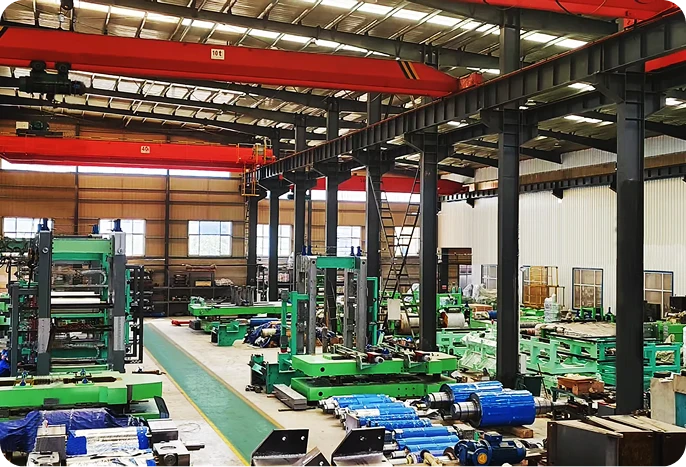

Quality is fundamental to the enterprise survival. We have established a comprehensive and meticulous quality management system and have successfully obtained ISO14000 certification. Starting from the design source, it supervises the entire production cycle, including design, procurement, processing, assembly, in-factory testing, installation, and online commissioning. The workshop is equipped with measuring tools like vernier calipers, spectrometers, hardness testers, and ultrasonic flaw detectors. They are used to check materials and control tolerances to ensure the final equipment meets or exceeds requirements. All products have a unique code, This enables the easy identification and traceability of the equipment components and ensures full control of quality.


-
 ミルスタンドIn the bustling world of beverage vending machines in Japan, one term that has gained immense popularity is Mirustando (ミルスタンド). An innovative concept that bring together the nostalgia of traditional milk bars with modern sensibilities, Mirustando stands out as a unique product offering that is captivating consumers nationwide. The experience of visiting a Mirustando is akin to stepping into a cur
 -
 custom millsUnderstanding Custom Mills The Backbone of Tailored Manufacturing In the age of mass production, where standardization often reigns supreme, custom mills have emerged as vital players in the manufacturing sector, offering unique services that cater to specific client needs. Custom mills specialize in processing materials, ranging from metals to plastics, and tailoring their products to meet the ex
 -
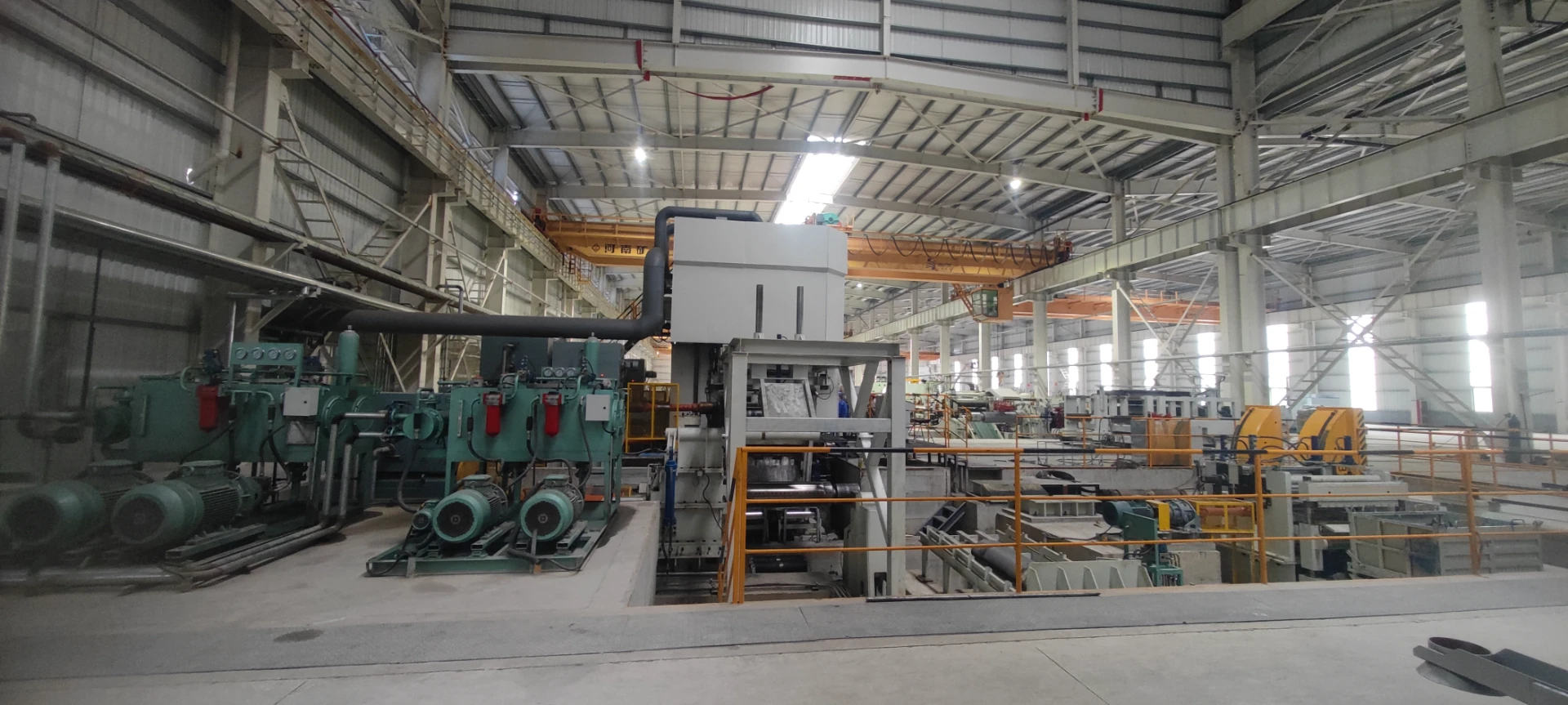 How Skin Pass Rolling Enhances Sheet Flatness and Appearance ConsistencyThe skin pass mill has become an indispensable component in the production of high-quality flat rolled products, serving as the final arbiter of sheet metal perfection. Unlike primary rolling processes that focus on bulk deformation, the skin pass rolling operation specializes in microstructural refinement and surface enhancement. This precision finishing step bridges the gap between metallurgical


